

Bandura
To Hold History in the Body
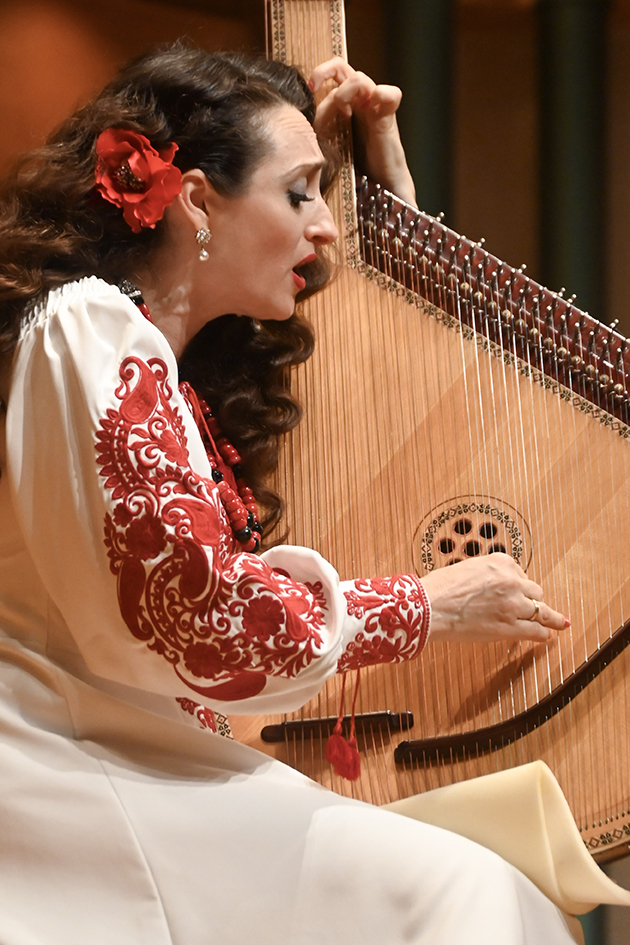
The bandura is a Ukrainian folk instrument. It has a pear-shaped resonating body and a short neck, and modern concert models carry 55 to 65 strings. It has no frets; the open strings are plucked like a harp’s. Its clear, crystalline tone blends naturally with the human voice, and singing to one’s own accompaniment has always been the instrument’s essential form.
Its bearers were the kobzari — blind itinerant musicians. Carrying their instruments from village to village, they sang epic ballads called dumy, transmitting Ukraine’s memory without recourse to the written word. Admitted to their profession only after a three-year apprenticeship under a guild system, they were oral historians who moved beyond the reach of any censor.
A Japanese reader will think here of the biwa hōshi. Blind musicians wandering the provinces with a plucked lute, chanting epics of war and downfall — the Tale of the Heike and the dumy. The parallel runs astonishingly deep, down to the guild organizations of the blind — the tōdōza in Japan, the kobzar brotherhoods in Ukraine — that governed training and certification.
But there is one decisive difference. The biwa hōshi faded gradually with modernization; the kobzari were deliberately exterminated by a state. In the 1930s, the Stalinist regime would not tolerate singers who wove the famine and repression of their own time into their ballads and carried memory beyond the state’s reach. In the same era as the Holodomor, as part of the assault on the bearers of Ukrainian tradition, many bandura players were arrested and shot during the Great Terror; Hnat Khotkevych, the father of the modern bandura, was executed in 1938. No one ever shot a biwa hōshi. This asymmetry with Japan is precisely what gives the act of playing the bandura its distinct political weight. A song that lives in the body could be silenced only by killing the singer.
Knowing this history, the meaning of Oksana Stepaniuk — a refugee from Ukraine — playing the bandura in Japan comes into focus. The essence of the kobzari was to carry memory in the body across borders when a community was being destroyed. A person driven from her homeland, bearing her culture in a single instrument, singing before audiences in a foreign land: this is nothing less than a reenactment, in the present day, of the kobzar’s function. And the force threatening that culture comes from the same direction it did ninety years ago.
Most of her listeners know none of this history. That is not a weakness. Performed before outside witnesses, this music is transformed from the heritage of one nation into a memory humanity cannot afford to lose. Her playing is not a refugee’s consolation in nostalgia; it is living proof that a technology of memory once powerful enough to be marked for annihilation is still at work today. tj
バンドゥーラ
身体に歴史を宿して
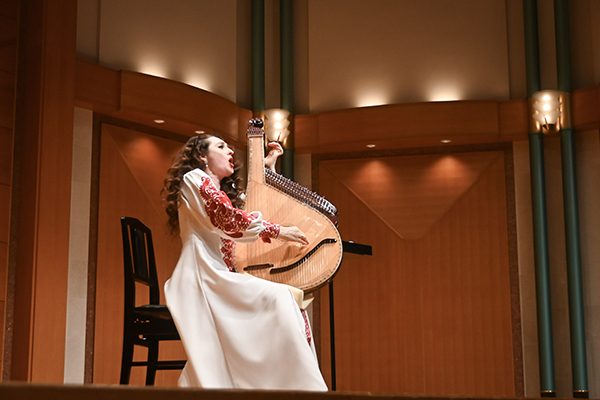
バンドゥーラはウクライナの民族楽器である。洋梨型の共鳴胴に短いネックを持ち、現代のコンサート型では55〜65本の弦を張る。フレットはなく、ハープのように開放弦を爪弾く。透明で硬質な響きは人の声とよく馴染み、弾き語りがこの楽器の本来の姿とされてきた。
その担い手が、盲目の遍歴楽師コブザーリである。彼らは楽器を携えて村から村を歩き、ドゥーマと呼ばれる歴史叙事詩を歌い、文字に依らずウクライナの記憶を運んだ。三年の徒弟修行を経て同業組織に認められる職能集団であり、検閲の外を移動する口承の歴史家だった。
日本の読者なら、ここで琵琶法師を思い浮かべるだろう。盲目の楽師が撥弦楽器を抱えて諸国を巡り、戦と滅亡の叙事詩——『平家物語』とドゥーマ——を語る。当道座とコブザーリのギルドという盲人の職能組織が資格を管理する点まで、両者は驚くほど平行している。
だが決定的な違いが一つある。琵琶法師は近代化の中で緩やかに衰退したが、コブザーリは国家によって意図的に絶やされた。1930年代、彼らが同時代の飢饉や弾圧を歌に織り込み、体制の手の届かぬ場所で記憶を運ぶことを、スターリン体制は許さなかった。ホロドモールと同じ時代、伝統文化の担い手への攻撃の一環として、多くの奏者が大テロル期に逮捕・銃殺され、近代バンドゥーラ改革の父フナト・ホトケーヴィチも1938年に処刑された。誰も琵琶法師を撃たなかった日本との、この非対称こそが、バンドゥーラを弾くという行為に固有の政治性を与えている。歌い手を消すことでしか、身体に宿る歌は消せなかったのである。
この歴史を知るとき、ウクライナから避難したオクサーナ・ステパニュクさんが日本でバンドゥーラを弾くことの意味が立ち上がる。コブザーリの本質は、共同体が破壊されたとき、記憶を身体に載せて国境を越えることだった。故郷を離れた人が楽器一つで文化を携え、異郷の聴衆の前で歌う——それはコブザーリの機能の、現代における再演にほかならない。しかも文化を脅かす力は、90年前と同じ方向から来ている。
聴衆の多くはこの歴史を知らずに聴く。だがそれは弱点ではない。外部の証人の前で演奏されるとき、この音楽は一民族の遺産から、失われてはならない人類の記憶へと変わる。彼女の演奏は郷愁の慰めではなく、かつて抹殺の対象になったほど強力な記憶の技術が、いまも生きて働いていることの証明である。tj
