


Longing for The Weaver Star
The Komachi Odori of Nishijin and the Living Memory of a Weaving Town
 The act of people gathering to dance in a crowd has, in every age, been inseparable from the land and from the memory of the communities that live upon it. What runs beneath Japan’s folk performing arts is above all an impulse: to move the body together within a single ring in order to ward off calamity, to pray for abundance, to send off the dead, and to let the living confirm one another’s presence. The most resplendent crystallization of that impulse was the furyū dance.
Furyū originally meant to adorn oneself lavishly and eye-catchingly, lavishing ingenuity on costume and accoutrements. The splendor with which floats and halberd-carts vied at shrine festivals, the flamboyant attire the people of the processions flaunted — that brilliance eventually took on the accompaniment of flutes, gongs, and drums, and of short songs, and turned into a dance of massed, whirling bodies. It was something wholly different from the mai, the dance performed on a special stage by trained adepts alone. This was an open folk art anyone could dance freely in the streets — a festival of the community itself, in which the very acts of dressing up, of gathering in a throng, and of dancing to the music held their worth.
This dance spread explosively in the age of great upheaval that ran from the Muromachi into the Edo period, when the old order was violently shaken. That season — in which inherited pedigree and authority crumbled before raw ability, and the basara spirit of mocking the established ran rampant — was also the soil from which the common people sprang forth as bearers of culture. People vied to devise novel conceits, dressed up, massed together, and paraded through the streets. Warding off disaster, praying for a good harvest, for rain, and for the repose of the dead — with these simple prayers for a peaceful life, the people of the community danced on across the generations. That this art, inscribed on UNESCO’s Intangible Cultural Heritage list in 2022, was a dance of regeneration that raised stricken lands to their feet again and again after every disaster, famine, and war, speaks eloquently of the destiny of this land called Japan, which has tasted earthquake, tsunami, and fire over and over. The dance was consolation, and prayer, and a discipline etched into the body by which a battered community might rise once more.
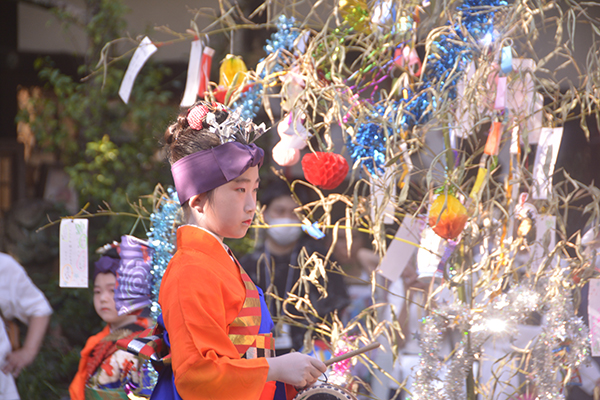
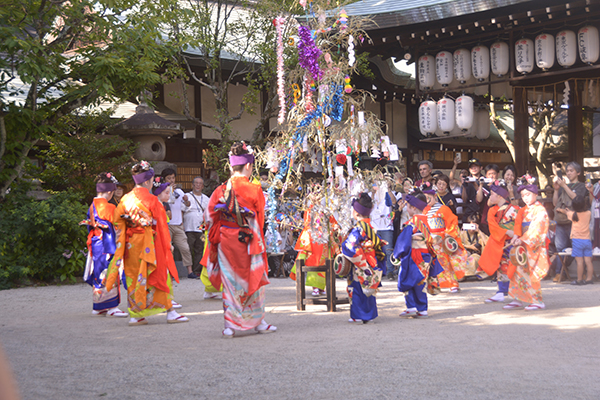
As the furyū dance became one of the wombs of the Bon dance and branched into countless forms according to the character of each locale, in Kyoto’s Nishijin there bloomed one especially delicate blossom of this art: the Komachi odori. It is said to originate in the singing and dancing of the girls who accompanied the messengers delivering waka poems at the kikōden rite, performing along the way; and tradition holds that around the Genroku era the young women of the Nishijin quarter danced through the streets dressed in Nishijin silk. The seventeenth-century Odori-zukushi zōshi emaki, a scroll depicting furyū dances, likewise preserves the figure of the Komachi odori — beautifully adorned girls singing as they dance through the town on the day of Tanabata — which tells us that this dance was no mere shrine legend but a real Tanabata sight upon the streets of early-modern Kyoto. Adorned girls beating small drums, dancing in a throng to short songs, parading through the town — the finery of the costumes, the songs and the accompaniment, the massed dancing in the streets: all of it carries the spirit of the furyū dance straight through.
And it is the very land in which this dance took root that tells the whole story. Nishijin is the town of the artisans who, burned by the flames of the Ōnin War, rebuilt their looms from the ashes each time and went on weaving the raiment of the thousand-year capital. In every last alley the sound of the tall looms rang out ceaselessly, and obi and Noh costumes worked with gold and silver thread were brought forth from behind the lattice doors — the very summit of Japanese silk. Falling, then weaving; burned, then turning back to the loom once more — for a weaving community that had survived through that repetition, the furyū dance, an art of regeneration that rises again after every wound, was an incomparably fitting one. When the girls of Nishijin circled the great bamboo with a prayer for skill offered to the deity of weaving, they were dancing, in their small bodies, the tenacious life-force of the town itself.
And yet Nishijin, too, has now left the vision of its heyday far behind. Those who wear kimono in daily life have vanished, many of the weaving houses that once stood eave to eave have taken down their shop curtains, and the sound of the looms that once filled the town is thinning. The weavers who staked their whole lives on a single obi have grown old, and the young hands to succeed them dwindle year by year. It is for this reason that the splendor of the single day on which the girls circle the great bamboo strikes the heart all the more. Girls in Genroku costume — purple headbands, silver bellflower hairpins, scarlet under-robes slipped from one shoulder — circle the great Tanabata bamboo, beating their small drums. Folded many times over within that small round dance are the furyū spirit that blossomed in an age of turmoil, the memory of a land that rose again after every calamity, and the prayers of the countless artisans who lived their lives at the loom.
The most artless act of the body — to dance — gathering up the memory of a land and its community, now lives on quietly, together with the thinning sound of the looms, in a single summer’s day in Nishijin. So long as the dancing continues, the community is still telling the story of itself. tj
織姫を恋うて
西陣の小町踊りと、織物の町の生きた記憶
 人が群れ集って踊るという営みは、いつの時代も、土地とそこに生きる共同体の記憶と分かちがたく結びついてきた。とりわけ日本の民衆芸能の底に流れているのは、災いをやり過ごし、豊穣を願い、死者を送り、そして生きている者たちが互いの存在を確かめ合うために、同じ輪のなかで身体を動かすという衝動である。その衝動が最も華やかに結晶したのが、風流踊りであった。
「風流(ふりゅう)」とは、もともと衣装や持ち物に趣向をこらし、華やかに人目を惹くように飾り立てることを指した。神社の祭礼で山車や鉾が綺羅を競い、行列の人々が派手な装いを誇ったあの絢爛が、やがて笛・鉦・太鼓の囃子と小歌をまとい、群れ舞う踊りへと転じていく。それは特別な舞台を必要とし、訓練を積んだ者だけが演じる「舞」とはまったく異なるものだった。誰もが街頭で自由に踊れる、開かれた民俗芸能。着飾ること、群れ集うこと、囃子に合わせて舞うこと自体が価値をもつ、共同体そのものの祝祭であった。
この踊りが爆発的に広まったのは、室町から江戸へと向かう、秩序が大きく揺らいだ時代においてである。旧来の家格や権威が実力の前に崩れ、既成のものを嘲笑う「婆娑羅(ばさら)」の気風が横行したこの季節は、庶民が文化の担い手として躍り出る土壌でもあった。人々は競って趣向を凝らし、着飾り、群れ、町を練り歩いた。除災や豊作、雨乞い、そして死者の供養——安寧な暮らしを願う素朴な祈りを込めて、共同体の人々が世代を超えて踊り継いでいく。二〇二二年にユネスコ無形文化遺産へ登録されたこの芸能が、災害や飢饉や戦乱のたびに傷ついた土地を幾度も立ち上がらせてきた再生の踊りであったことは、地震や津波や火災を繰り返し味わってきた日本という土地の宿命を、よく物語っている。踊りは、慰めであり、祈りであり、そして打ちのめされた共同体がもう一度立ち上がるための、身体に刻まれた作法だったのだ。
風流踊りが盆踊りの母胎の一つとなり、各地の土地柄に応じて無数に枝分かれしていくなかで、京都・西陣には、この芸能のひときわ可憐な一輪が咲いた。小町踊りである。乞巧奠の際に和歌を届ける文使いのお供の娘が道中で歌い舞ったものを起源とし、元禄の頃には西陣界隈の乙女たちが西陣織を着飾って町々を踊り歩いたと伝わる。十七世紀の風流踊りを描いた「踊尽草紙絵巻」にも、七夕の日に美しく着飾った少女たちが歌いながら町中を踊り歩く小町踊りの姿が留められており、この踊りが単なる神社の縁起にとどまらず、近世京都の街路に実在した七夕の風物であったことがうかがえる。着飾った少女たちが小太鼓を打ち、小歌に合わせて群れ舞い、町を練り歩く——衣装の華やぎ、小歌と囃子、街頭での群舞。そのすべてが、風流踊りの精神をまっすぐに宿している。
そして、この踊りが根を下ろした土地こそが、すべてを物語る。西陣は、応仁の乱の兵火に焼かれ、そのたびに焼け跡から機を立て直し、千年の都の装いを織り続けてきた職人たちの町である。路地という路地に高機の音が絶え間なく響き、金糸銀糸をあしらった帯や能装束が格子戸の奥から生み出されてきた、日本の絹織物の頂点。倒れては織り、焼けては再び機に向かう——その反復のなかで生き延びてきた織物の共同体にとって、傷ついてはまた立ち上がる再生の踊りである風流踊りは、この上なくふさわしい芸能だった。西陣の少女たちが機織りの神への技芸祈願を込めて大笹をめぐったとき、彼女たちは、自分たちの町そのものの粘り強い生命力を、小さな身体で舞っていたのである。
もっとも、その西陣もいまや最盛期の面影を遠くに置いてきた。着物を日常に着る人は絶え、軒を連ねていた織屋の多くは暖簾を下ろし、町じゅうに響いていた機の音も細りつつある。帯一本に生涯を賭けた織り手たちは老い、後を継ぐ若い手は年々数を減らしている。それゆえ、少女たちが大笹をめぐって舞う一日の華やぎは、いっそう胸を打つ。紫のハチマキに桔梗の銀かんざし、緋の襦袢を片袖脱ぎにした元禄装束の少女たちが、小太鼓を打ちながら七夕飾りの大笹をめぐる。その小さな群舞のなかには、動乱の世に華やいだ風流の心も、災厄のたびに立ち上がってきた土地の記憶も、機に生きた無数の職人たちの祈りも、幾重にも折り畳まれている。
踊るという最も素朴な身体の営みが、土地と共同体の記憶を束ねながら、いま、細りゆく機の音とともに、西陣の夏の一日に静かに息づいている。踊りが続くかぎり、共同体はまだ、自らの物語を語りつづけているのである。tj
